

Oil pulling: A health-enhancing practise
What about oil pulling and fillings?
According to the Coconut Research Center: ‘Oil pulling will not and cannot loosen properly placed crowns or fillings. The only time oil pulling will affect crowns or fillings is if the teeth underneath have decayed and are full of infection. In this case, the foundation on which the crowns or fillings are secured to is badly decayed and unable to hold the dental material. Oil pulling removes, bacteria, pus, and mucus. It cannot pull out porcelain, amalgam, or composite dental materials from the teeth. If you have fillings or crowns, you are completely safe. If however, a filling or crown does come loose, be thankful. This indicates that the underlying tooth is rotting and full of infection. This infection is spreading throughout your mouth and your entire body. You need to have it removed as soon as possible. If oil pulling brought your attention to this problem, you are lucky because now you know the problem exists and can take care of it without experiencing further harm.’
What Science says?
Research has demonstrated a direct link between oral health and chronic illness, and although there are only a limited number of scientific studies specific to oil pulling, there are thousands of anecdotal reports that attest to the benefits of this practise.
A study published in the ‘Journal of Ayurveda and Integrative Medicine’ reviewed holistic approaches to oral health. The researchers reported that oil pulling is one of the most effective natural health solutions known to scientists for the prevention of tooth decay and tooth loss. In addition, the authors of this study have the following to say about this traditional healing practice: ‘Oil pulling is a powerful detoxifying Ayurvedic technique that has recently become very popular as a Complementary & Alternative Medicine remedy for many different health ailments. Using this method, surgery or medication could be prevented for a number of chronic illnesses. The oil therapy is preventative as well as curative. The exciting aspect of this healing method is its simplicity. Ayurveda advises oil gargling* to purify the entire system; as it holds that each section of the tongue is connected to different organ such as to the kidneys, lungs, liver, heart, small intestines, stomach, colon, and spine, similarly to reflexology and Traditional Chinese Medicine.’
NB – the term ‘gargling’ isn’t used in the conventional sense i.e. gurgling a glug of liquid in the back of the throat – it is a more colloquial turn of phrase in this instance to mean swishing oil through the teeth with the mouth firmly closed.
A commentator of this research states: ‘This study highlights how the detoxification effect that oil pulling has on the entire body reaches far beyond oral health. This is especially important for people who have conditions that contraindicate brushing such as mouth ulcer, fever, indigestion, those who have tendency to vomit, have asthma, cough, or thirst.’
A number of other studies have been conducted by researchers in India that all indicate positive benefits of oil pulling for both adults and children.
Upping the ante with essential oils

Adding a few drops of essential oil to your daily oil pulling regime can enhance the therapy even further. About 1 drop per 5-10 ml is usually palatable and effective as a starting dilution, but it’s up to you how much you like or can safely tolerate. [If in doubt consult a health professional qualified in the clinical use of essential oils for guidance.] Obviously organic essential oils are preferential, with culinary-tasting oils often topping the partiality charts. In general, spearmint, peppermint, lemon, orange, grapefruit, ginger and fennel are favourite basic oils to start with. They can be used either singly or in combination.

Other oils, like oregano, tea tree, thyme and myrrh also have a place, especially when there is illness or gum disease present, but they are indeed an acquired taste! And although clove oil is traditionally the oil of choice for toothache – take care with the dosage, as it’s highly potent and can burn the oral mucosa if indiscriminately used.
And if essential oils aren’t to your taste, there are food flavourant oils that can be used – it’s all a case of personal preference.
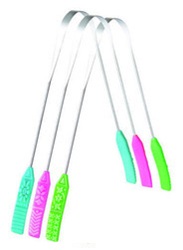
Whether this is a method of oral health practice for you or not, is up to you – but at least give it a try before dismissing it out of hand. And finally, if you don’t already use a tongue scraper [brushing your tongue with your toothbrush just isn’t the same], think about getting one of these simple devices to complete your oral hygiene care. They come in all sorts of designs and tongue scraping is an excellent adjunct to an oil pulling regimen, as well as for overall oral hygiene.

CONTINUED ON PAGE 4